
Anyone got a clean breakdown of the Makita 18V battery pinout?

May 5, 2026
86
0
6
toolcroze.com
The Makita 18V pinout are one of those topics that comes up frequently in discussions but the information about it is widely scattered. The basic pins for the 18V packs include a minus pin, plus pin, a TH pin for temperature monitoring and a C1 pin located at the junction between the battery cell group for balancing. Additionally, the Makita tool utilizes pins 1-7 to identify the battery pack. I'm not exactly sure what goes into each of these pins but I would imagine that's what allows for the recognition of the higher capacity vs. The lower capacity battery packs.
For those that are looking to rebuild or utilize the battery packs outside of a Makita tool, knowing what each pin do is essential. From what I've found in my research, the information on most sites about the 18V packs includes the +, -, TH, C1 pins and pins 1-7, but does not offer an explanation of what each of the 7 identification pins does individualy.
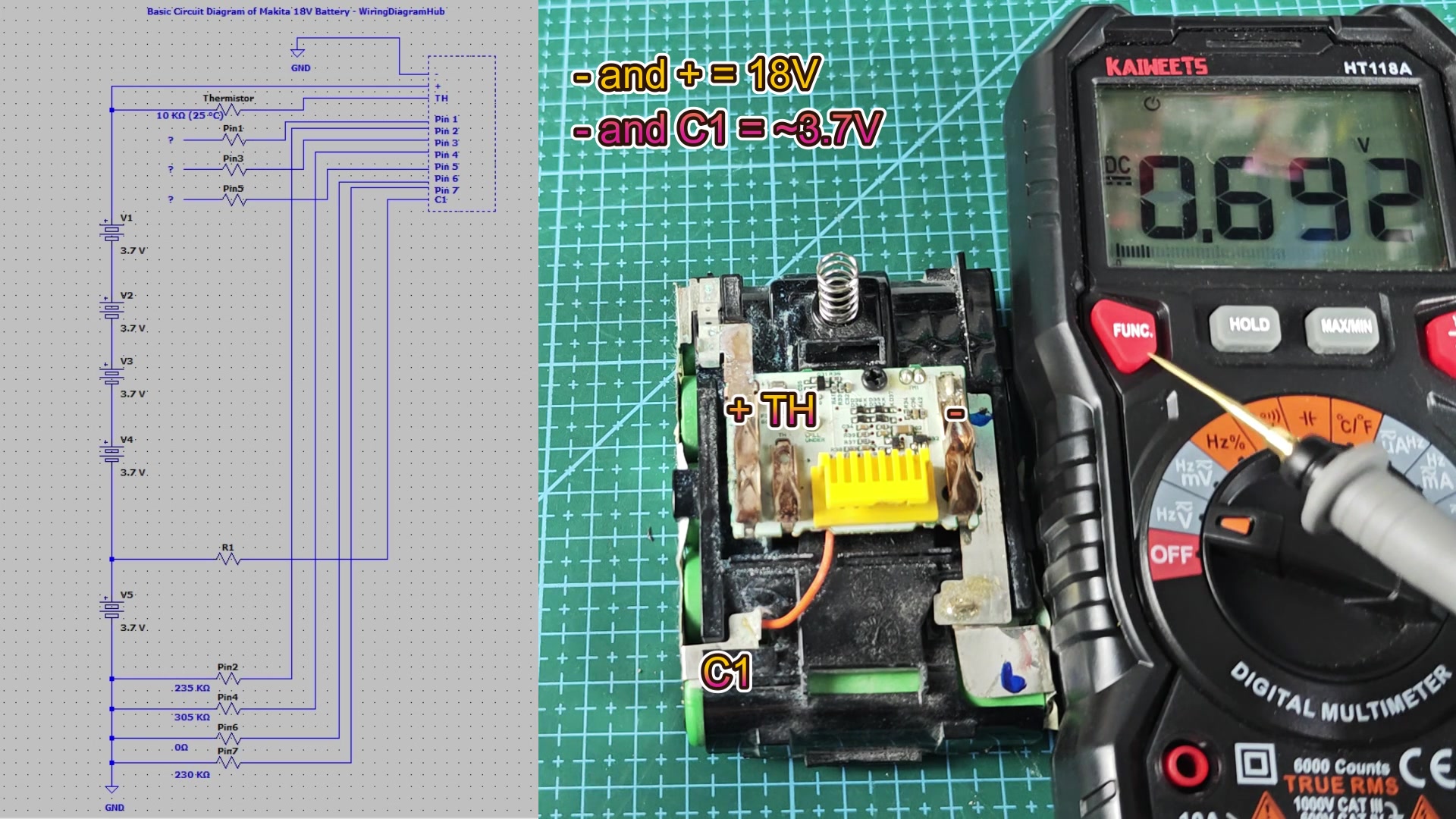
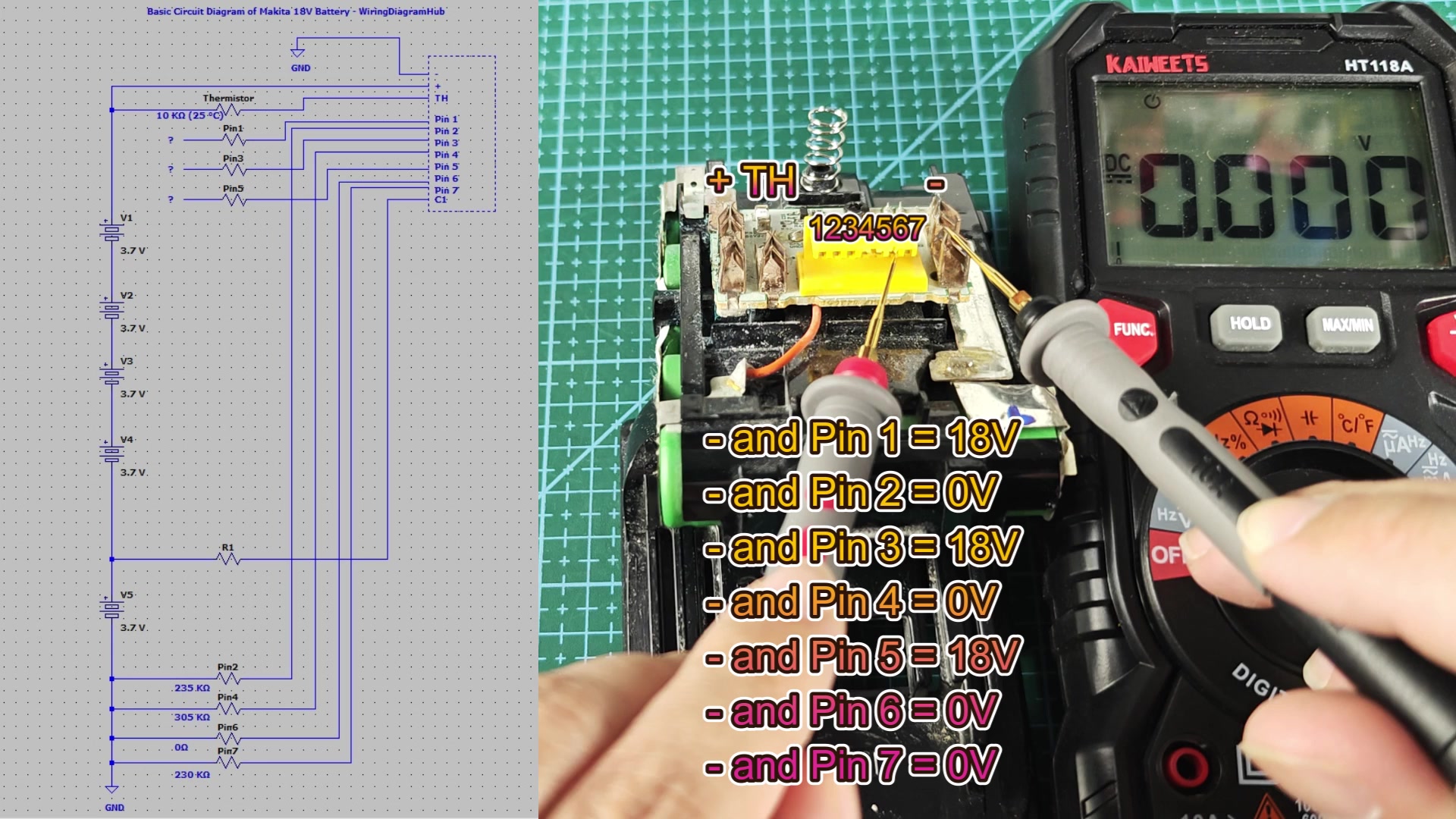
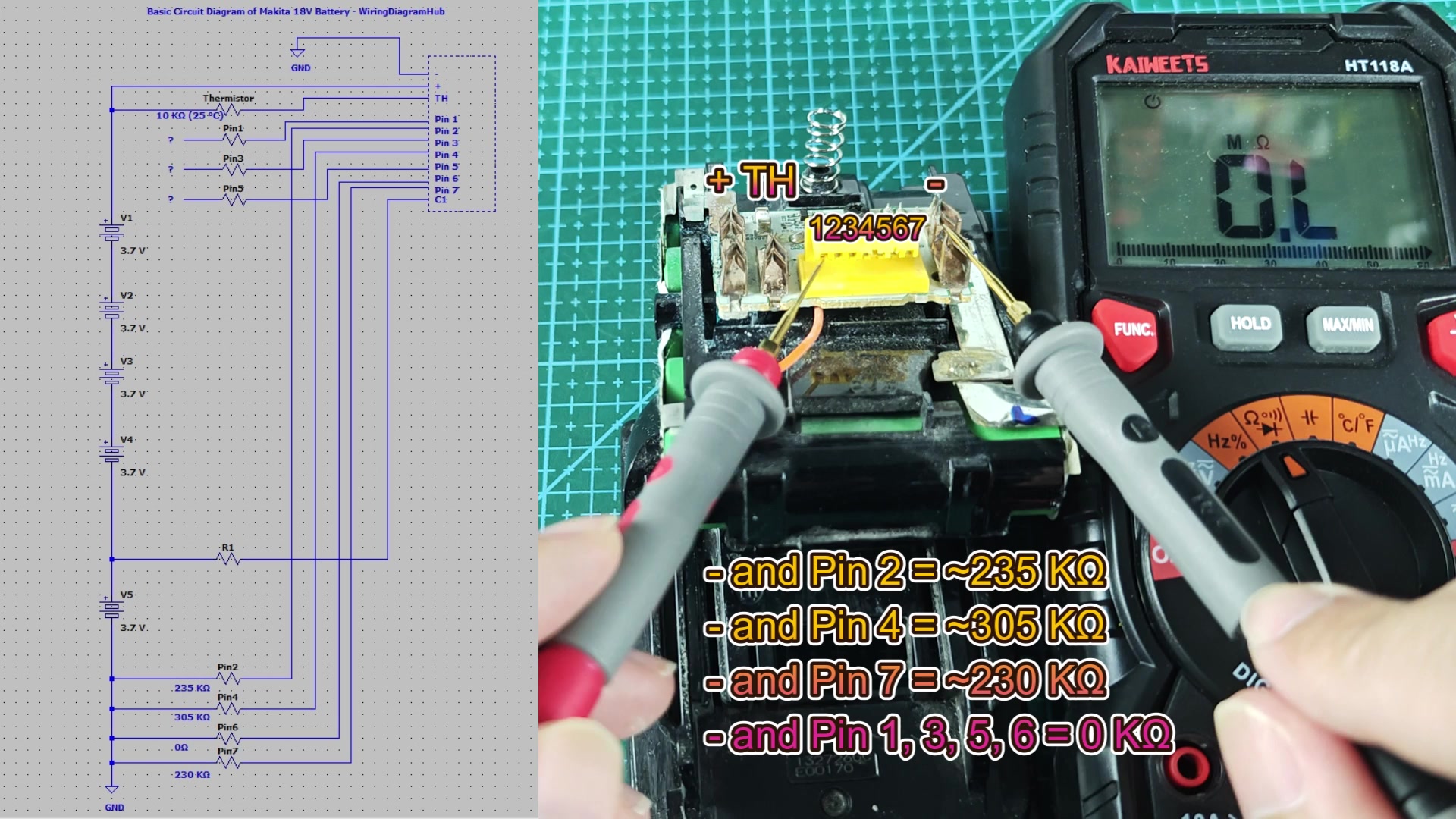
anyone-got-a-clean-breakdown-of-the-makita-18v-battery-pinout-1.jpg

anyone-got-a-clean-breakdown-of-the-makita-18v-battery-pinout-2.jpg

anyone-got-a-clean-breakdown-of-the-makita-18v-battery-pinout-3.jpg
 
the ID pins are just resistor coding afaik, no actual data lines. Its how the tool figure out if you have a 3Ah vs 5Ah vs 6Ah pack mostly. Nothing fancy going on like serial comms or anything.
 
the ID pins are just resistor coding afaik, no actual data lines. Its how the tool figure out if you have a 3Ah vs 5Ah vs 6Ah pack mostly. Nothing fancy going on like serial comms or anything.

Wait so if it's just resistor coding could you in theory short two pins to make the tool think it's a more higher capacity pack? For instance, my old 1.5Ah battery pack that I never use could potentially be shorted to act as if its a higher capacity battery pack?
 
Wait so if it's just resistor coding could you in theory short two pins to make the tool think it's a more higher capacity pack? For instance, my old 1.5Ah battery pack that I never use could potentially be shorted to act as if its a higher capacity battery pack?

You can't fool the tool into giving you more runtime than the cells that the battery pack contains lmao. The battery just contains the amount of capacity that it contains. The ID pins just let the tool know what kind of battery it's dealing with.
 
The C1 pin on the 18V Makita battery is not used for balancing the battery pack with the tool. The balancing occur on the charger. The battery's BMS system is very minimal. Most of the features on the chargers are actually built into the tool itself which is why aftermarket chargers can be sketch.
 
The various LXT battery packs has changed over time. The older 3Ah models and the newer 6Ah models are not identical in how they signal the tool.
 
After tearing apart around 15 of these packs in the past few years I've been rebuilding them for guys in the shop I've noticed that not all of the 7 pins on the 18V packs are utilized by all battery packs. Some of the pins are tied to ground, some are floating and a few have resistors set to certain values to indicate the class of the battery pack. The newer models with star protection have some additional logic but otherwise its still just based on resistors. The other thing that is not discussed in most forum posts or guides is that the TH pin is actually essential; if its open circuit the tool will refuse to operate at all. This is the reason that some rebuilder might ignore the thermistor altogether when reusing the battery case.
I've also seen people swap out the BMS board entirely with aftermarket boards and have decent luck but lose the genuine pack ID that newer battery tools use.
 
has anyone mapped this out for the XGT 40v packs too or is that a totally different animal? i know they look similar but the comms might actually be real on those
 
has anyone mapped this out for the XGT 40v packs too or is that a totally different animal? i know they look similar but the comms might actually be real on those

XGT is a completely different beast, they have actual digital communication between the pack and the tool. LXT use a resistor to identify the battery class.
 
on the LXT packs, is the resistor used between two specific ID pins or between one pin to ground?

Pin to ground in most cases. Tool applies voltage and reads the resistance of the divider to determine the pack class. Different resistances means different classes of batteries. Same approach used by most OEM battery brands.
 
bit off topic but has anyone encountered using a makita charger on a bauer pack? They use the same cells i think but different pinout
 
so assuming someone wants to run a makita pack on a custom ebike or something, would they just need the +/- power pins to supply power or would they also need to account for the ID pins?