Anyone got a solid breakdown of the DeWALT 20V battery pinout?

May 5, 2026
83
0
6
toolcroze.com
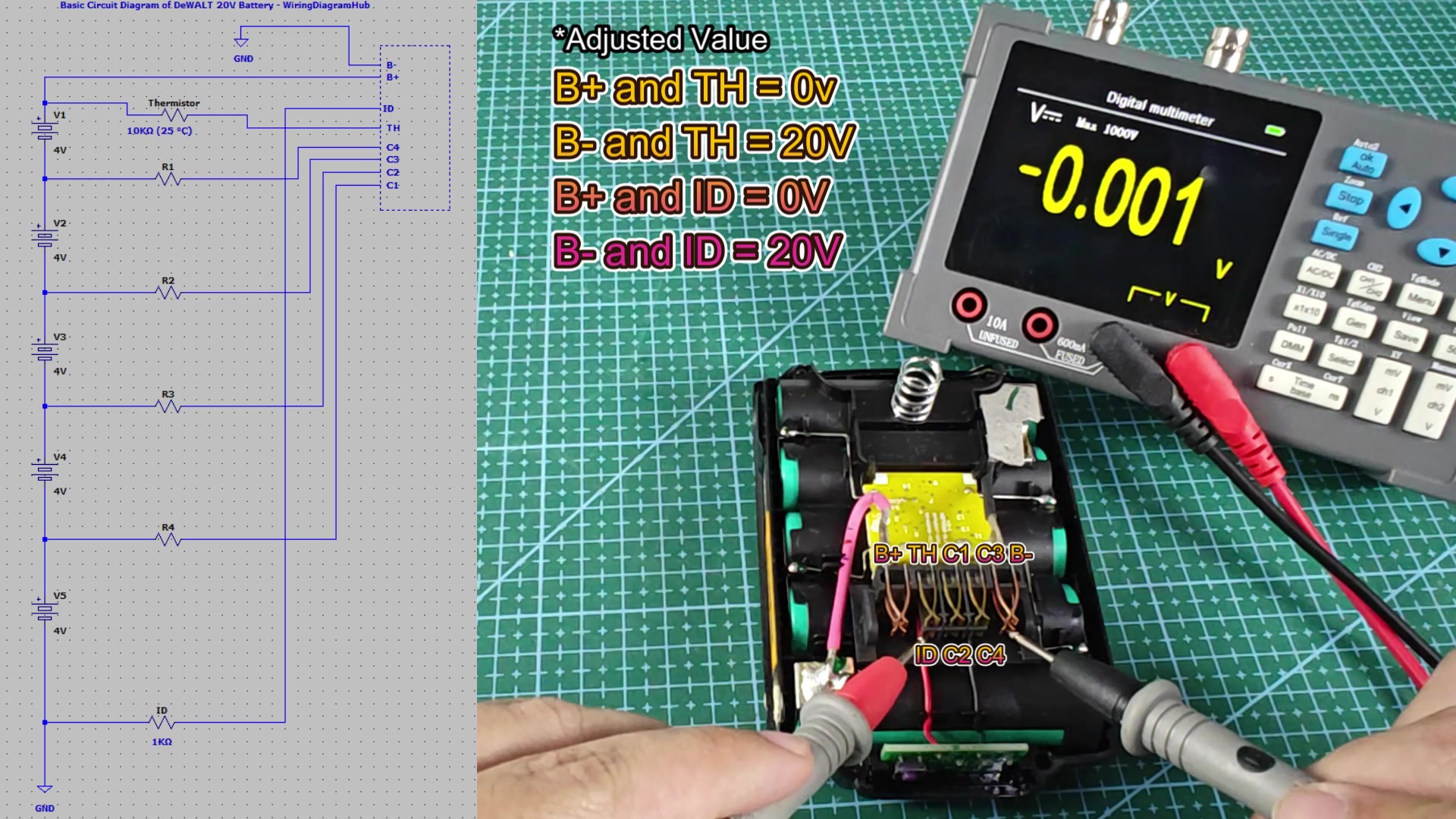
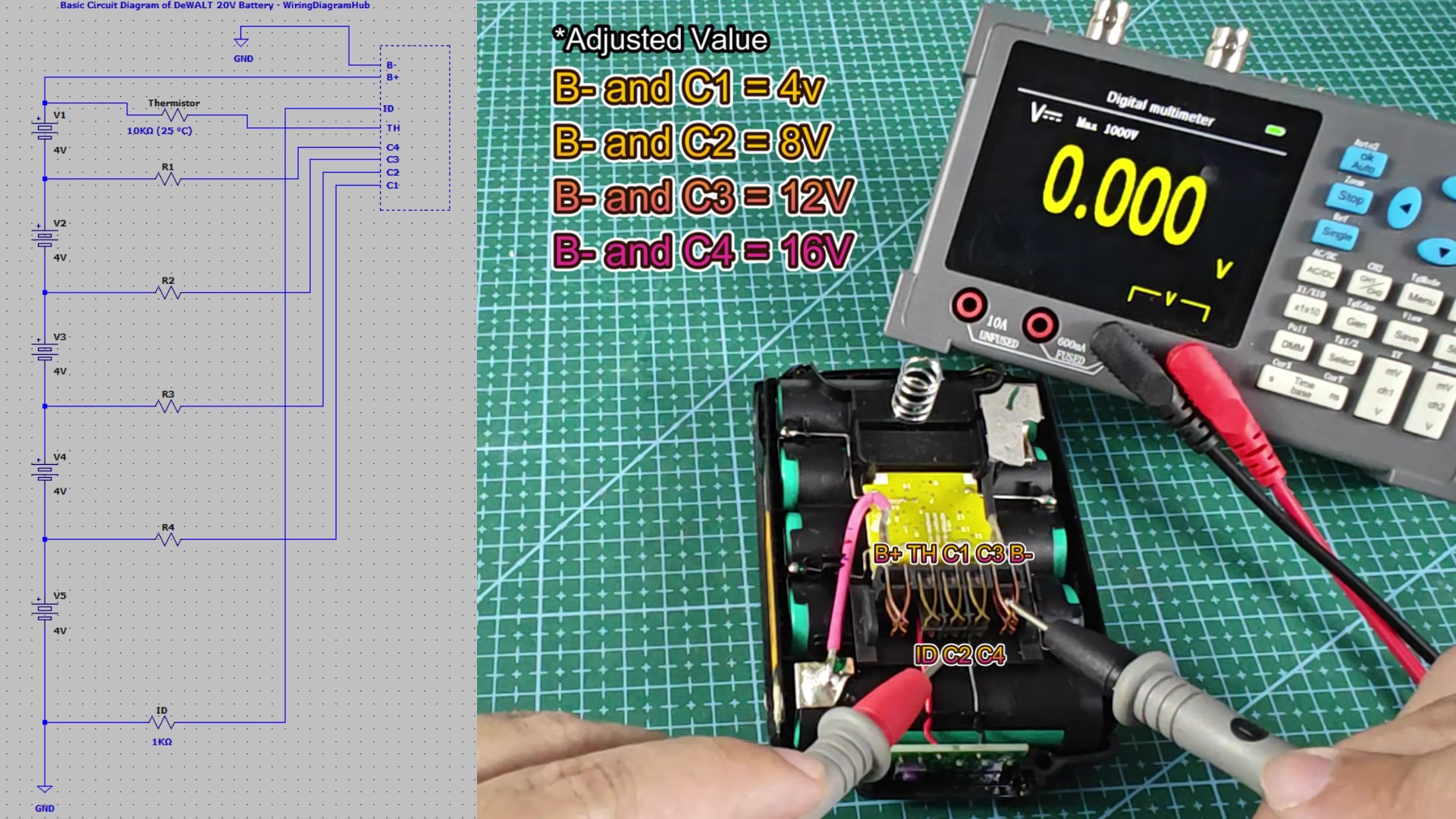
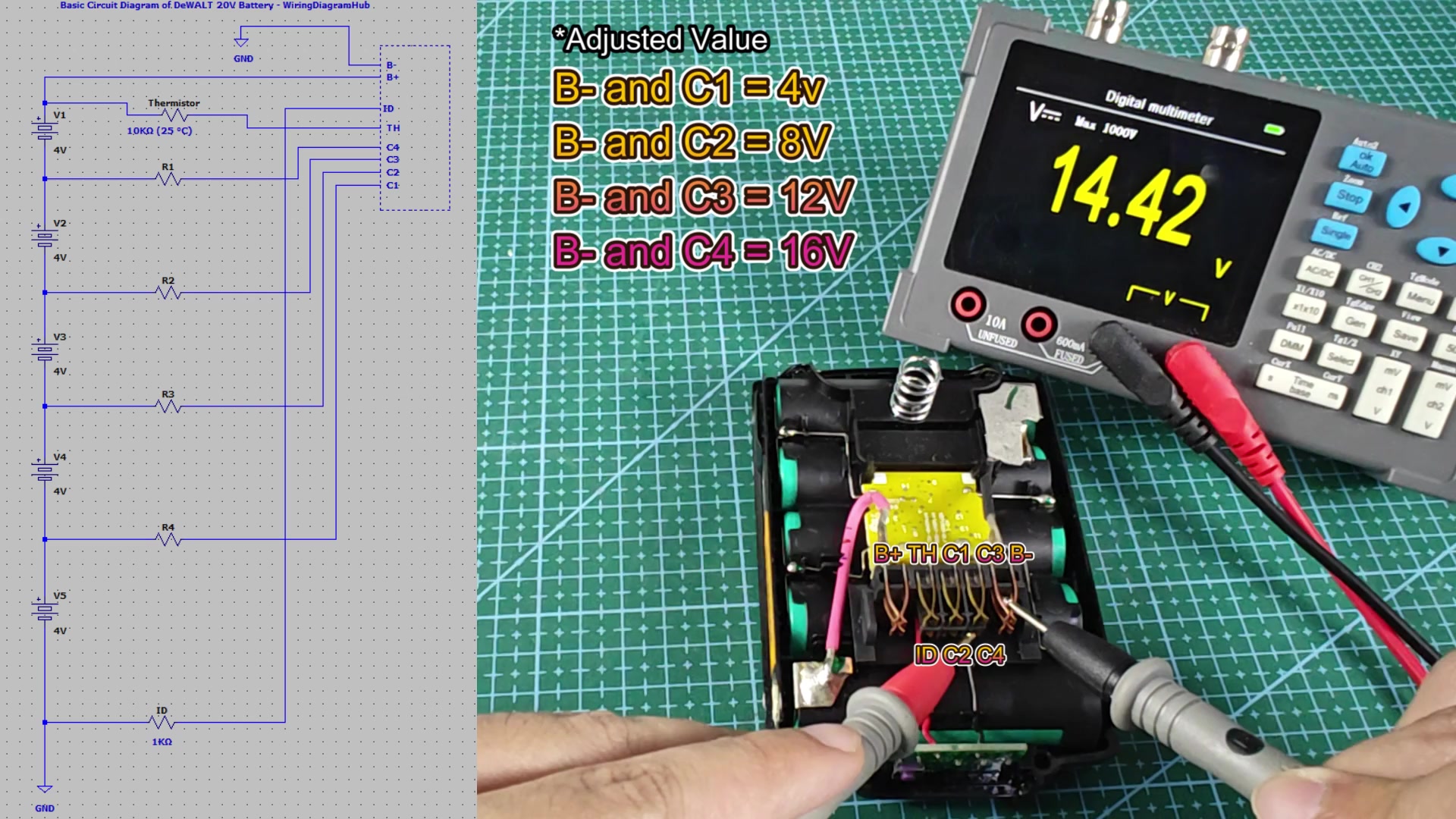
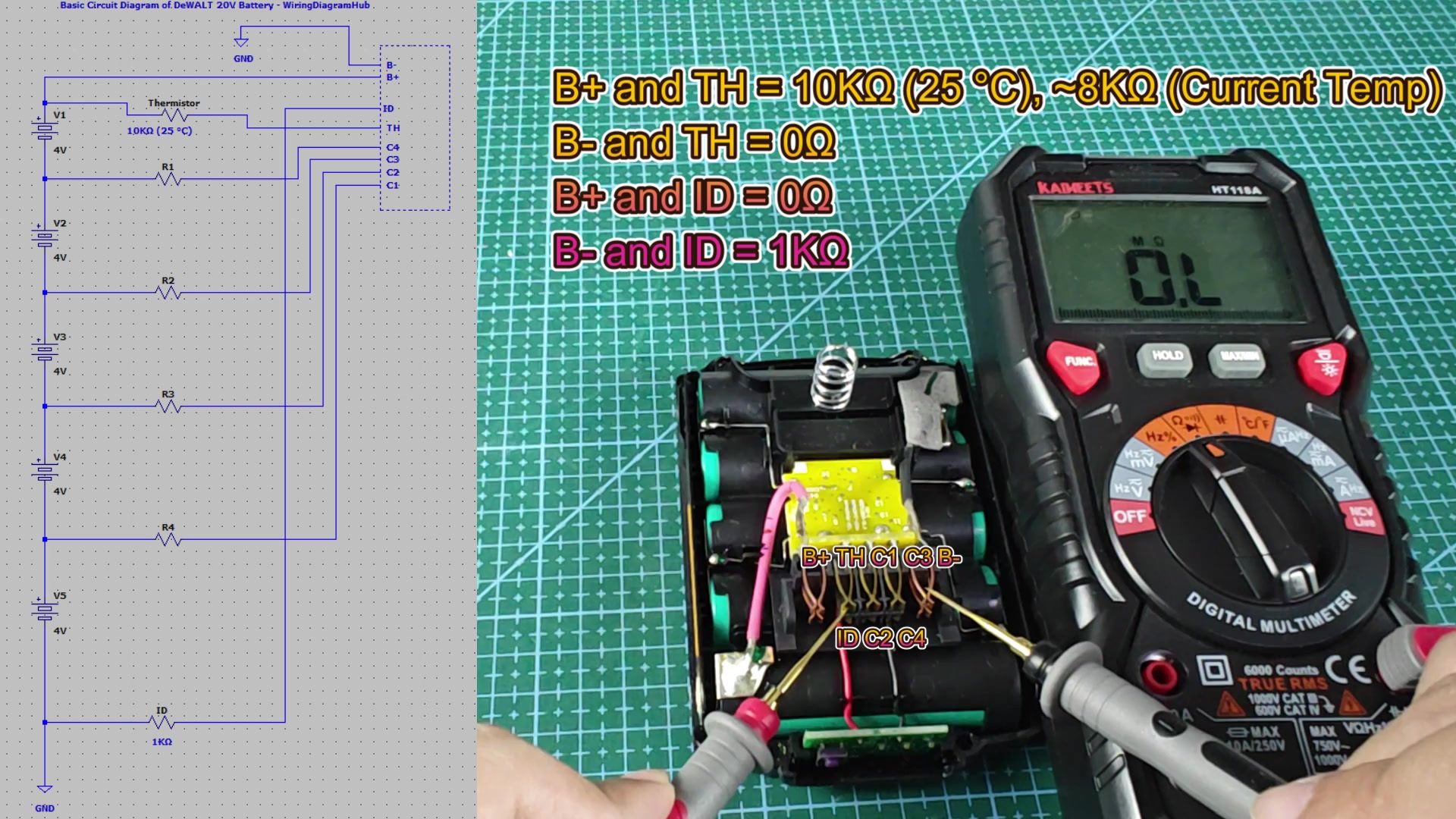
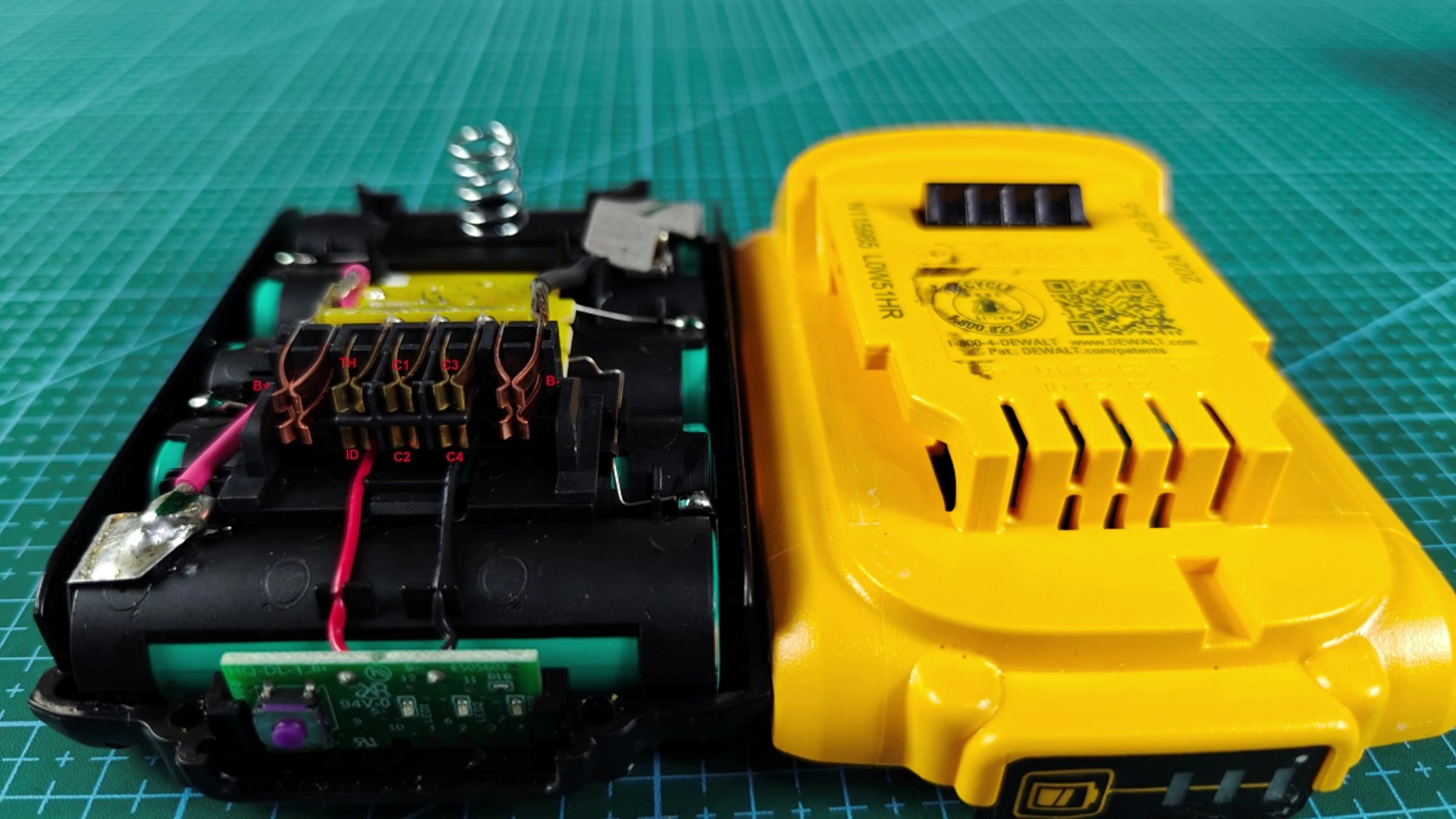
Find some informations on what each pin do on the DeWALT 20V packs. Most of the diagrams out there shows the same information which is good to start with but ultimately want to know what each contact pins does.
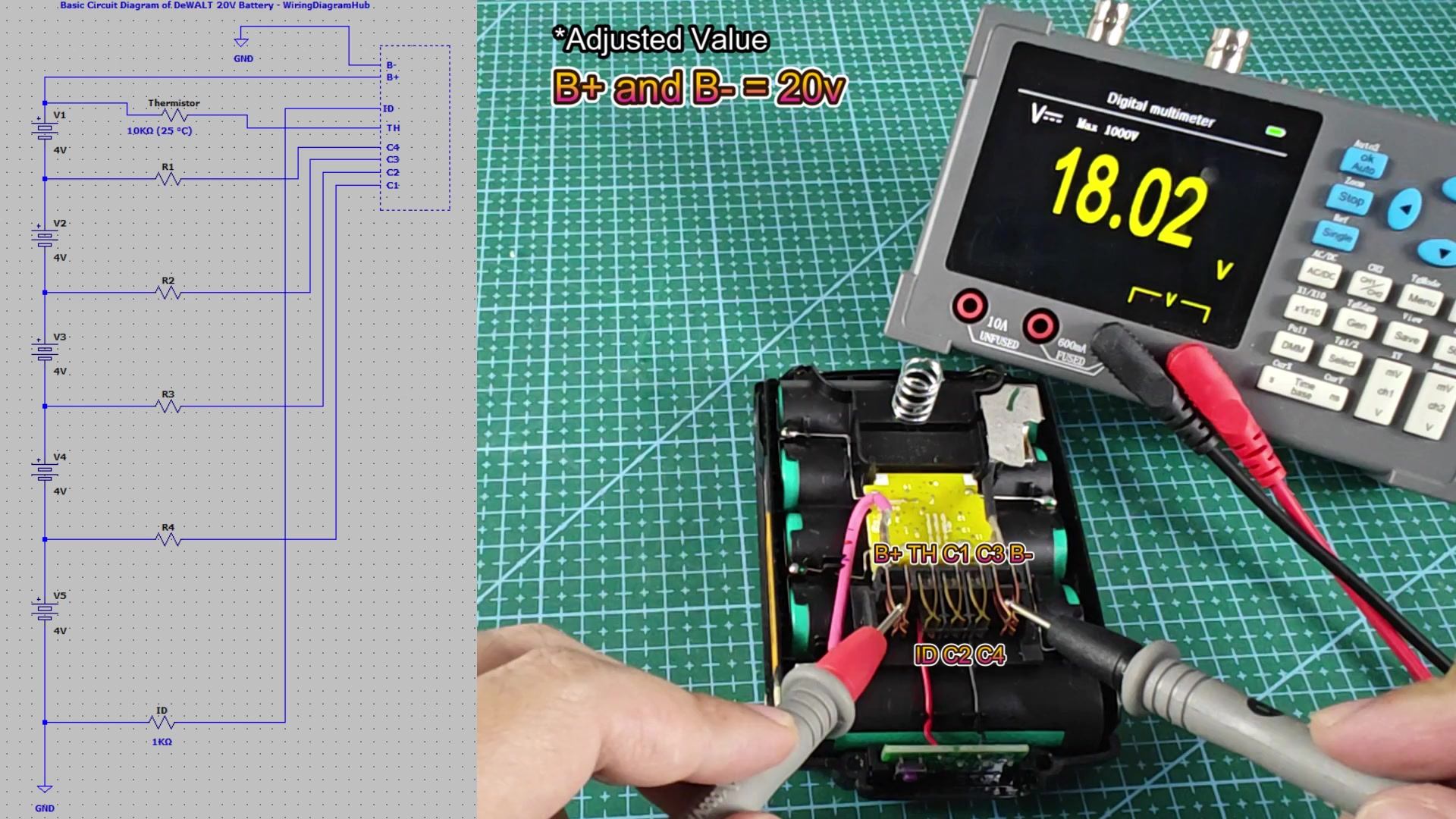
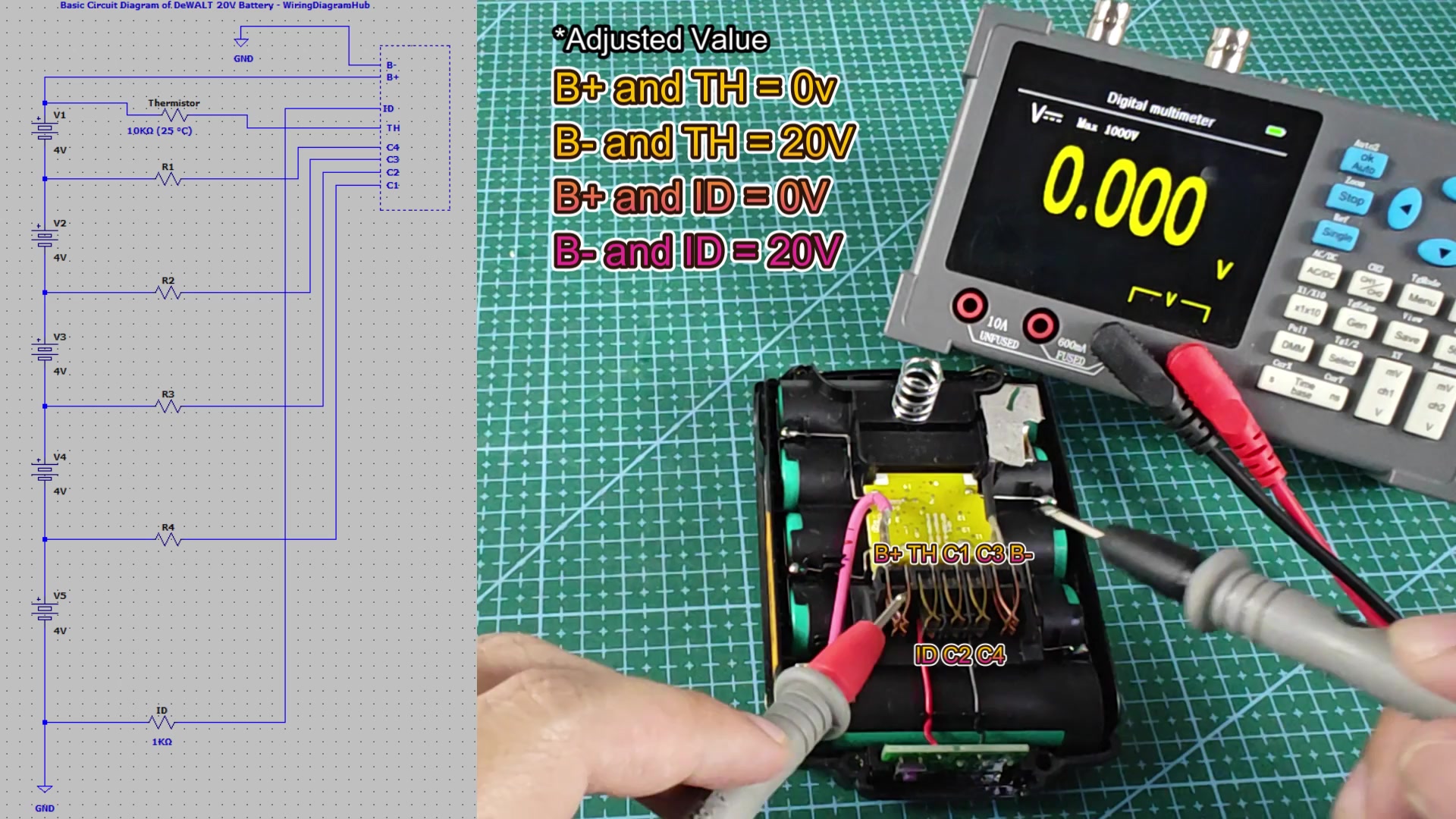
B- and B+ are an obvious negative and positive for the cells. Then there is an ID pin to identify the battery. Next is the TH pin which is used for thermistor to measure the temperature of the battery cells. Finally the C1-C4 pins is used to tap into each group of cells allowing for balance between the cells in the battery.
The tricky one is the ID pin as there is a variety of different Dewalt tools and they all use different capacities of batteries and the tools use the ID pin to recognize if it is meant for a compact battery or flexvolt tool. So if someone were to meter the ID pin on a variety of different DeWALT packs would that value change or would it always be the same? Would it be safe to use the C1-C4 pins to allow for balance charging for the packs?
anyone-got-a-solid-breakdown-of-the-dewalt-20v-battery-pinout-1.jpg

anyone-got-a-solid-breakdown-of-the-dewalt-20v-battery-pinout-2.jpg

anyone-got-a-solid-breakdown-of-the-dewalt-20v-battery-pinout-3.jpg

anyone-got-a-solid-breakdown-of-the-dewalt-20v-battery-pinout-4.jpg

anyone-got-a-solid-breakdown-of-the-dewalt-20v-battery-pinout-5.jpg

anyone-got-a-solid-breakdown-of-the-dewalt-20v-battery-pinout-6.jpg

anyone-got-a-solid-breakdown-of-the-dewalt-20v-battery-pinout-7.jpg
 
the ID pin is a resistor to ground however the value of that resistor will depend on the capacity of the battery. Flexvolt tools use there own separate connection to identify the battery as they have a 20v and 60v configuration.
 
If the ID pin is a resistor then what prevents the high draw tool from simply drawing from the compact 1.5ah battery until it dies? Does the tool read the value of that resistor or simple check for the presence of the resistor?
 
If the ID pin is a resistor then what prevents the high draw tool from simply drawing from the compact 1.5ah battery until it dies? Does the tool read the value of that resistor or simple check for the presence of the resistor?

When I rebuilt packs several years ago the value of the ID pin resistor vary between packs. A compact 1.5ah used a 10k resistor and a 5ah used a different value. The tool reads the value and adjust the current limits that are placed on the battery. However on some of the older tools it did not matter what value the resistor was as the tools did not use it.
 
C1-C4 are used for balance charging which is fine so long as you do not go over 50mA on each tap. Pack BMS dont actively monitor the cells during balance charging unless the battery is placed into the tool or charger.
 
You are way overthinking it. It is simply a resistor. The tool reads the voltage drop and figure out what the resistance value is. Nobody thinks that Dewalt batteries has some kind of cryptographic handshake going on between tool and battery. The flexvolt tools have their own configuration as they have to physically switch between 20v and 60v configurations in the tool. If you were to place a scope on the ID pin you would see no fancy signal going on there. Just DC voltage. C1-C4 pins are safe for balance charging so long as you do not exceed 50ma on each pin. The BMS does not actively monitor the battery at this time unless it is being used in the tool itself.
 
You are way overthinking it. It is simply a resistor. The tool reads the voltage drop and figure out what the resistance value is. Nobody thinks that Dewalt batteries has some kind of cryptographic handshake going on between tool and battery. The flexvolt tools have their own con…

The switching between 20v and 60v configuration on flexvolt tools is purely mechanical??
 
You are way overthinking it. It is simply a resistor. The tool reads the voltage drop and figure out what the resistance value is. Nobody thinks that Dewalt batteries has some kind of cryptographic handshake going on between tool and battery. The flexvolt tools have their own con…

It is not purely mechanical. There is FETs inside of the battery that switch between the 20v and 60v configurations. The other guy is correct in the gist of what he said but oversimplify it.